Which Coupe is Better Suited for the Indian Market: Citroën Basalt (ICE) or Tata Curvv? (EV)
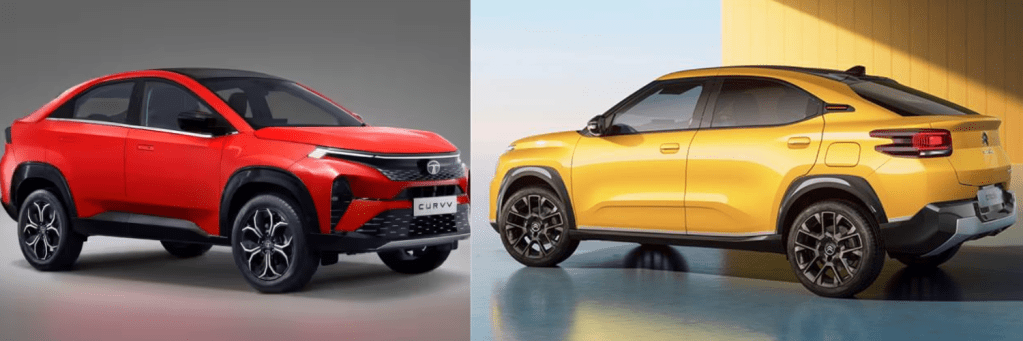

The compact Coupe SUV segment is undergoing a significant transformation, driven by advances in electric mobility and innovative designs. Two competitors in this evolving landscape are the Tata Curvv and the Citroën Basalt. While both vehicles cater to the growing demand for environmentally conscious and stylish compact SUVs, they do so through distinct approaches in design, performance, and technology.
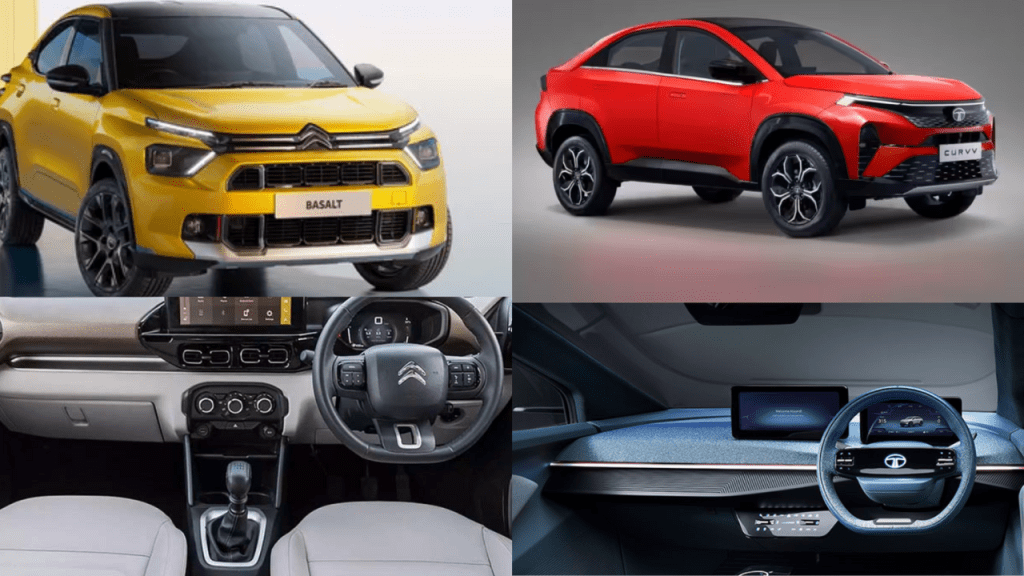
The Tata Curvv represents a bold step in Tata Motors’ design evolution. The vehicle features a coupe-SUV silhouette that blends the appeal of an SUV with the sleek, aerodynamic lines of a coupe. The sharp edges, prominent front grille, and aggressive stance give the Curvv a futuristic look. LED lighting elements, including a continuous light strip across the front and rear, accentuate the vehicle’s modern aesthetics.
Similarly, the Citroën Basalt takes a more unique approach to design, as Citroën’s reputation is known for quirky and unconventional styling. The Basalt’s rounded, aerodynamic shape, along with its distinctive use of bright colour and contrasting materials, gives it a unique presence on the road. The Basalt also features Citroën’s signature Airbump technology, which adds a layer of protection while enhancing the vehicle’s distinct look.
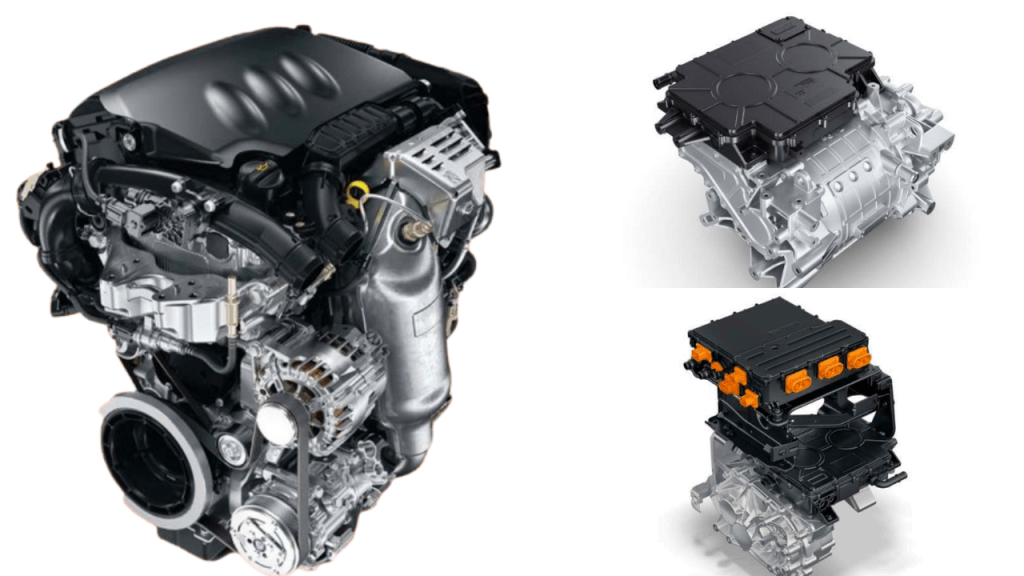
The Tata Curvv is built on Tata Motors’ new generation electric vehicle (EV) platform, 45-55 kWh High energy density Lithium ion battery pack which is designed to accommodate a range of powertrains, including fully electric and hybrid options. The Curvv is expected to offer a powerful electric motor capable of delivering up to 116-123 horsepower, with a torque output of around 215 Nm. This powertrain allows for swift acceleration, with the Curvv projected to go from 0 to 100 km/h in under 9-8.6 seconds (Claimed). The vehicle is equipped with a high-capacity battery pack, offering a range of approximately 400 kilometers on a single charge, making it a practical choice for both city driving and longer journeys.
The Citroën Basalt offers an Internal Combustion engine. 1.2L 3 Cylinder Generation 3 engine with two variants, a Naturally Aspirated, and a PureTech Turbo. Producing an output of around 110 horsepower and 115-205 Nm of torque. This translates to a 0-100 km/h time of about 10 seconds, making it more of a leisurely cruiser than a performance-oriented SUV. Giving a claimed efficiency of 18 Kilo-meter Per Litre Of Petrol.
The vehicle is equipped with cutting-edge technology that enhances both entertainment and productivity, featuring a smart digital steering wheel, multiple voice assistants including Alexa, and a 26.03 cm cinematic touchscreen infotainment system with Android Auto and Apple CarPlay over WiFi. It boasts advanced safety features such as a 360º 3D surround view camera system, blind spot view monitor, and Level 2 ADAS for improved driving assistance. Additionally, the vehicle offers seamless connectivity with wireless smartphone charging, V2V and V2L technology, and a voice-assisted panoramic sunroof, ensuring a modern and convenient driving experience.
The Citroën SUV features advanced technology including a 17.78cm color digital TFT cluster, an infotainment system with Citroën Connect 2.0, and wireless charging capabilities. It supports Android Auto and Apple CarPlay for seamless smartphone integration and offers three customizable driving modes: Minimal, Eco Drive, and Dual Mode. Additional tech features include remote engine start, wireless mirroring, and geofencing, enhancing connectivity and convenience for drivers.
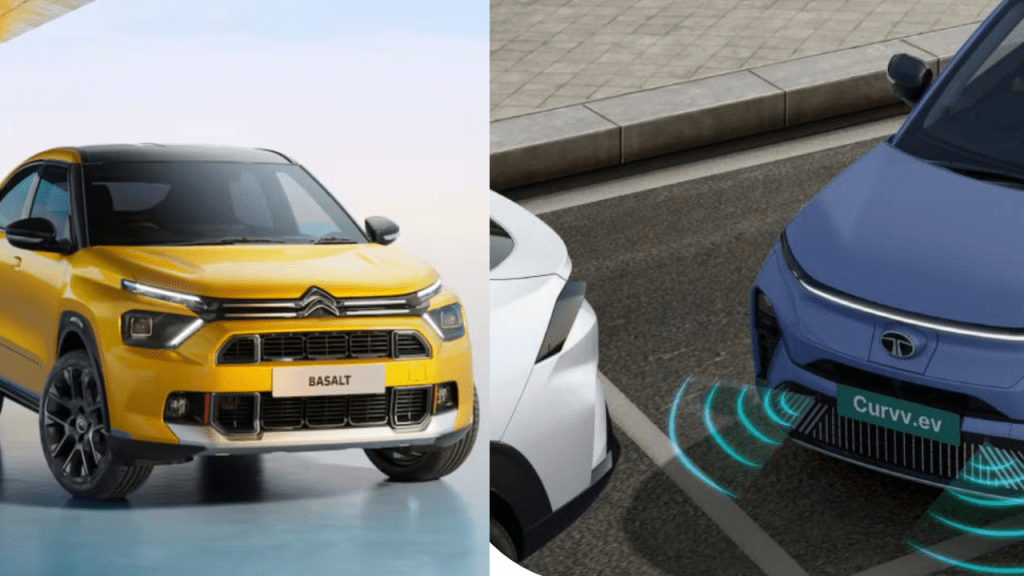
The Tata Curvv and Citroën Basalt represent two distinct visions of the future compact SUV. The Curvv appeals to those seeking a performance-oriented, tech-savvy vehicle with a strong emphasis on sustainability. In contrast, the Basalt caters to drivers who prioritize comfort, style, and a budget Both vehicles, however, underscore the growing importance of electric mobility and innovative design in the automotive industry, setting new benchmarks in their respective categories. Both promise respective features in relation with pricing and the segments they belong too, Citroën has shown limited signs of sale in the Indian Domestic Market, since its launch. However, the car’s price point aims to offer better value-for-money to compete with Tata. The Indian market is run on familiarity, data has shown consumers prefer to purchase trusted and known vehicles over innovative cars. A huge concern with consumers would be reliability and ground clearance for the first few months.
 WE SPOT